Closing the diagnostic gap in endometrial cancer.
Endometrial cancer is the most common gynecologic cancer in the United States and the only major one with no screening test. The Foundation works on the part of the pathway that comes before a diagnosis, where almost nobody else is.
A gap hiding in plain sight.
In other areas of women's health, routine screening has become embedded in ordinary practice. A woman expects a mammogram. She expects a Pap. The expectation itself does a great deal of the work.
Endometrial cancer has no equivalent. Detection is reactive, dependent on a symptom appearing rather than on anything scheduled. The result is variability in what women are told, inconsistency in how they are evaluated, and unequal outcomes. Some women are caught early. Many are not. Too often the difference comes down to luck.
Patient need defines the mission across the whole pathway
A woman with symptoms needs a fast, competent route to a diagnosis. A woman with a known risk needs a plan built around it. A woman who feels well, with no reason yet to think about any of this, deserves the truth: symptoms are not screening, and no screening test for this disease exists yet.
Waiting for a warning sign is not early detection. It is reaction.
Three things have to change at once.
What women know to ask for, what clinicians know to offer, and what families understand is at stake. Change one without the others and nothing moves.
What women know to ask for
We help women understand their own risk, recognize what counts as abnormal, and walk into an exam room with the specific question already formed. A specific question gets a different appointment.
What clinicians know to offer
We support the shift toward proactive, risk-aware, office-based evaluation, so the system meets women earlier rather than later. The Foundation does not provide clinical care or direct clinical decisions.
The question nobody taught men to ask
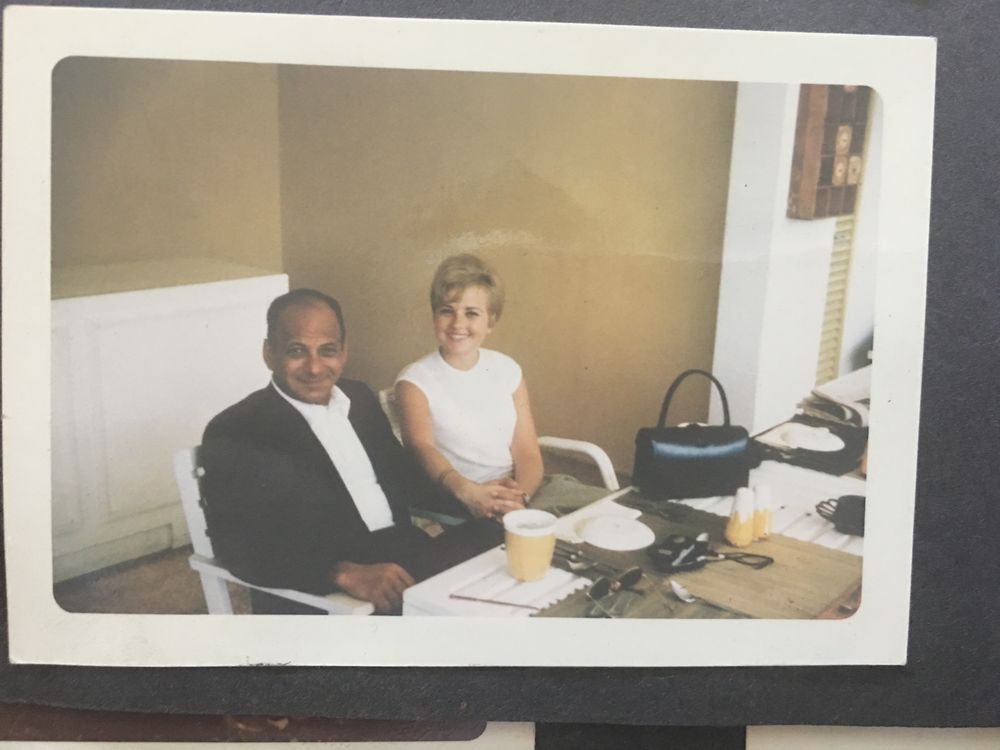
A diagnosis arrives in a woman’s body and then moves through a household. Eva’s husband spent the last years of his life writing that he knew she had symptoms, that he assumed they were ordinary, and that he never asked how long they had been going on. He wrote that he had been seeing rather than observing. We bring husbands, fathers, sons and brothers into this work and we give them that question, because the person who says this has gone on too long is frequently not the patient.
And where the gap is widest
Black women die of this disease at nearly twice the rate of white women, and the ultrasound used to triage bleeding performs measurably worse where fibroids are more common. Reaching those women earlier is built into the work, not added to it.
Five program areas, one system.
Not a set of separate initiatives. Five areas that reinforce each other, so that education leads to a question, a question leads to an evaluation, and what we learn goes back into the education.
Education and Awareness
Plain-language explainers, symptom checklists, downloadable guides and newsletter education, distributed through digital channels and community partners. All materials are general in nature and do not constitute medical advice. See the free guides.
Patient Expectation and Engagement
Tools that help a woman become an informed participant in her own care: what-to-ask scripts, appointment preparation, family conversation frameworks. They reduce uncertainty and improve the conversation without directing clinical decisions. The questions to ask.
Clinical Pathway and Systems Awareness
Convenings, clinician roundtables, general frameworks, and where the opportunity is right, funding independent research designed and overseen by clinical and public health partners. The Foundation does not provide clinical care.
Access and Equity
Partnerships, translated materials and targeted outreach so the work reaches women facing the greatest barriers to information and care, including through safety-net clinics and community distribution.
Program Evaluation and Continuous Improvement
We track what we can honestly count: guide downloads, newsletter sign-ups, partner organizations distributing materials, event attendance and survey feedback. These are engagement measures. We do not provide care and we do not track patient outcomes.
An endorsing organization of the National Strategy to Close the Women's Health Gap.
In August 2026 the Foundation joined more than fifty organizations endorsing the National Strategy to Close the Women's Health Gap, a $20 billion, ten-year federal framework launched in July 2026 by the Society for Women's Health Research, the American College of Obstetricians and Gynecologists, and the Women First Research Coalition.
Our name sits alongside the Society of Gynecologic Oncology, Susan G. Komen, the American Heart Association, the American Diabetes Association and the Endocrine Society.
We are there for the women and families who have not been diagnosed yet. Before the symptoms, before the referral, before anyone is a patient.
The federal government has named early detection. One cancer has nothing to detect it with.
On October 19, 2026, Executive Order 14437, Advancing Women’s Health to Improve Outcomes in All Phases of Life, established the White House Women’s Health Task Force and directed the creation of a Women’s Health Division at the National Institutes of Health.
The order directs the Task Force to improve prevention, early detection, diagnosis, treatment and long-term health outcomes for women and girls. It directs the new NIH division to accelerate time to diagnosis.
That is the whole of what this Foundation works on, and it has been since before the order was signed.
Where the gap still sits
The order names cancer among the conditions needing more research, and it names endometriosis, fibroids and PMOS individually. PMOS, the condition most women still know as PCOS, carries a meaningfully higher lifetime risk of endometrial cancer. Those women are already part of who we write for.
No gynecologic cancer is named on its own. The most common one in the United States is also the only major one with no screening test, and one of the few cancers in the country where the death rate is still rising. Early detection is hard to deliver for a disease with nothing to detect it.
We hold no commercial interest in which test eventually closes that gap, and we endorse none of them.
Executive Order 14437, signed October 19, 2026, published at 91 FR 66779. American Cancer Society: the endometrial cancer death rate rose 1.6 percent per year from 2014 to 2023.
Said plainly, because you should not have to go looking.
The Eva Tucci Foundation for Early Detection & Prevention is an independent nonprofit, charitable and educational organization recognized by the IRS as tax-exempt under Section 501(c)(3), EIN 41-5225790. It was incorporated in Delaware as a nonstock corporation in March 2026 and received its IRS determination letter on July 29, 2026.
It raises its own funds and is governed by its own board. It has no corporate parent and no commercial sponsor.
The Foundation’s founder built it while she was employed at Utepreva, a women’s health company. That employment ended in September 2026. Utepreva has no governance role in the Foundation, no claim on its work, and does not fund it.
We endorse no test, device or company, and we hold no financial interest in any of them. Nothing on this site recommends a specific product, technology or commercial entity.
Its materials are general in nature and do not constitute medical advice. It does not provide clinical care.