We are not waiting for women to become patients.
A foundation for early detection and prevention, built on a simple belief: women deserve to be seen before the symptoms begin.
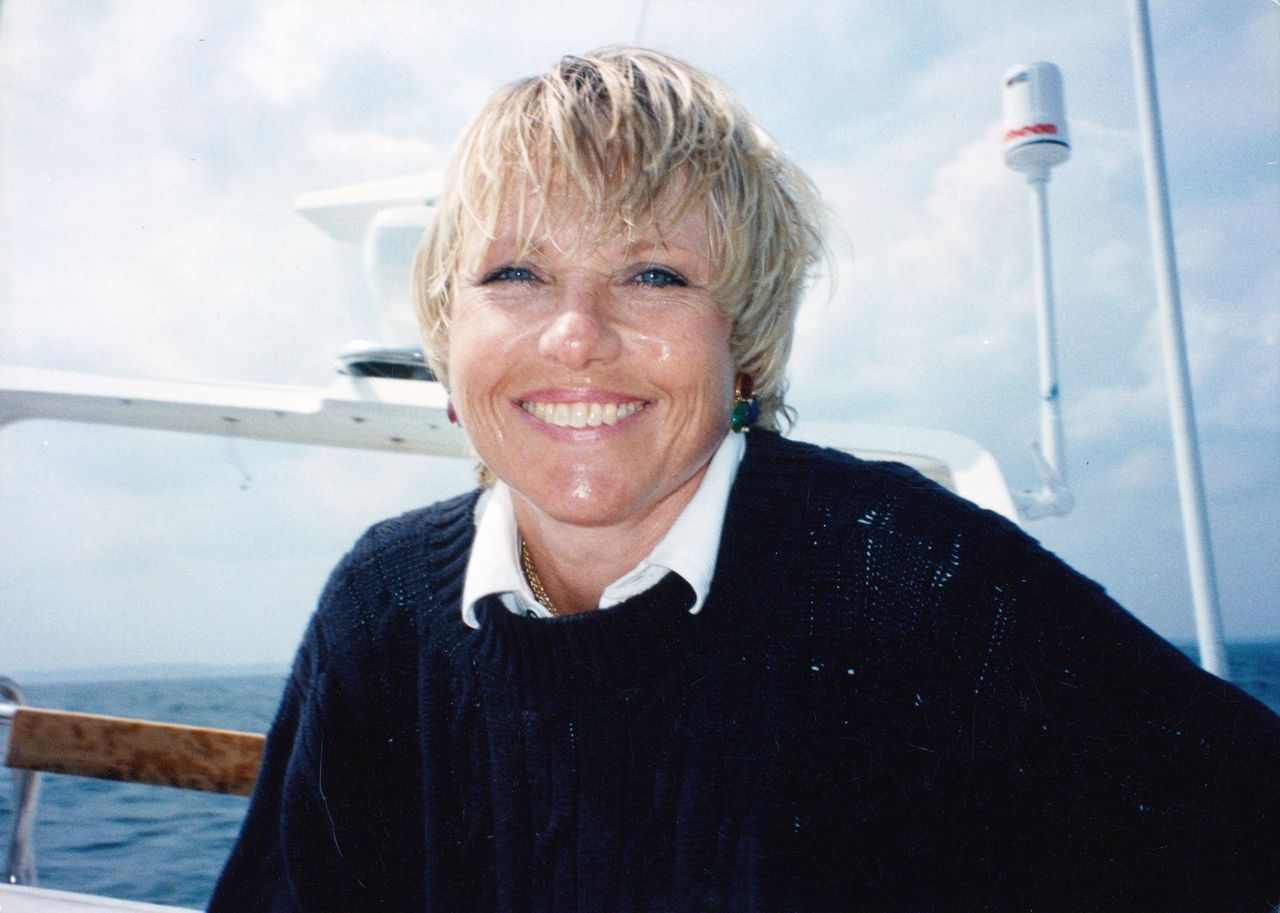
Eva Gunilla Tucci, 1993. Three years before her diagnosis.
There are five gynecologic cancers. One of them has a screening test.
Most women believe their annual exam checks for all five. Here is what the Pap test actually does, and what to notice instead.
We have endorsed the National Strategy to Close the Women's Health Gap.
The Eva Tucci Foundation is now an endorsing organization of the National Strategy to Close the Women's Health Gap, a $20 billion, ten-year federal framework launched in July 2026 by the Society for Women's Health Research, the American College of Obstetricians and Gynecologists, and the Women First Research Coalition.
Our name sits alongside more than fifty organizations, among them the Society of Gynecologic Oncology, Susan G. Komen, the American Heart Association, the American Diabetes Association, and the Endocrine Society.
We are the first patient advocacy organization for uterine and endometrial cancer on that list. The Society of Gynecologic Oncology speaks there for the clinicians. We are there for the women.
Endorsing organizations list, reviewed 24 August 2026.
Symptoms are not screening.
Endometrial cancer is the most common gynecologic cancer in the United States, yet unlike the Pap smear, there is still no routine early-detection paradigm. Too often, women are taught to wait for a warning sign. We are working to change that expectation.
How little has changed.
For nearly a century, screening transformed the odds for one cancer after another. Uterine cancer was left behind, and the cost is rising.
Our evidence standard. Every statistic on this site is drawn from peer-reviewed research or major clinical guidelines, and cited. Our educational materials are developed with medical-advisory input, currently in formation. We do not publish anecdotal medical advice. When Amy shares her own experience, it is clearly labeled as her story.
Sources
- American Cancer Society. Cancer Facts & Figures 2025; Key Statistics for Endometrial Cancer (NCI SEER incidence, mortality, and survival data). cancer.org
- Giaquinto AN, et al. Cancer statistics for African American and Black people, 2025. CA: A Cancer Journal for Clinicians.
- American College of Obstetricians and Gynecologists. Updated guidance on the evaluation of postmenopausal bleeding, April 2026. acog.org
- Projected trends in the incidence and mortality of uterine cancer in the United States to 2050. Cancer Epidemiology, Biomarkers & Prevention (AACR), 2025.

A diagnosis moves through everyone who loves her.
In 1996, Eva was diagnosed with advanced endometrial cancer. Six months later, she was gone. When a woman is lost too soon, a daughter loses her mother, sons lose their center, a husband loses his partner, a whole family loses its sun.
The Eva Tucci Foundation was built from that loss, and from a conviction that earlier answers should not be a matter of luck.
Read the full storyAt the very beginning, every dollar goes further.
Uterine cancer is medically urgent and badly underfunded. We are small, new, and building the infrastructure of a movement from the ground up. That makes this the rare moment when a single gift helps decide what gets built.
reaches more women with the warning signs that could save a life.
funds the educational materials we put in front of women and clinicians.
keeps this work alive, issue after issue, woman after woman.
The Launch Fund.
We are raising our first $250,000 to build the foundation's first year, and to launch the "Symptoms Are Not Screening" campaign. Gifts from $1,000 to $100,000 each build a specific, named piece of the work.
Not a traditional cancer charity.
Before symptoms, not after
We focus upstream, on education and awareness that help women expect earlier evaluation, instead of being taught to wait until something is already wrong.
For the whole family
Cancer begins in a woman's body, but it changes daughters, sons, husbands, and fathers. We invite the people who love her into the conversation, including men and boys.
Building a new standard
We are not a single campaign or a single device. We are helping build the educational and behavioral infrastructure that makes early detection routine, understood, and expected.
Myth, or fact?
Most women were never told the truth about uterine cancer. See how much you already know.
"A Pap smear screens for uterine cancer."
A Pap smear screens for cervical cancer. It does not reliably detect uterine cancer, and there is no routine screening test that does.
"Any bleeding after menopause is normal and not worth a visit."
Any bleeding after menopause is never normal. It is the most common warning sign of uterine cancer and should always be evaluated.
"Uterine cancer deaths are falling, like most cancers."
It is one of the very few cancers in the U.S. where deaths are rising, not falling, and the trend is projected to continue for decades.
"Obesity is the single biggest driver of rising uterine cancer."
True. Excess body fat raises estrogen that stimulates the uterine lining, and more than half of uterine cancers, around 57 percent, are attributable to it.
Help build a future where women never have to wait.
Endometrial cancer is medically urgent and philanthropically under-served. That makes this the moment to make a visible, lasting difference, at the very beginning of a movement.